The adjuster's estimate lands in your inbox and looks reasonable at first glance. The square footage is close. The shingles are there. But then you start reading line by line, and the gaps become obvious.
Where's the drip edge? Where's the starter strip? Did they really scope one layer of tear-off on a roof that clearly has two?
This isn't unusual. Industry data shows that 78% of initial insurance estimates are missing line items, and the average scope is written for just 50-65% of what it should be. That means there's often $1,000 to $5,000 or more sitting on the table that you're owed but won't receive unless you supplement.
Here are the 10 line items adjusters miss most often, why they miss them, and what they're worth.
Total Value At Stake
$5,300–$11,000+ per job in commonly missed items
1. Starter strip shingles
What it is: The first course of shingles along the eave, designed with adhesive to seal the bottom row and prevent wind uplift.
Why it's missed: Adjusters frequently bundle starter strip into the waste factor of field shingles, arguing you can just cut architectural shingles to create the starter row.
Why that's wrong: Most shingle manufacturers require a specific starter strip product to maintain the wind warranty. Using cut-up field shingles voids the manufacturer's warranty. Estimating software has separate rates for starter vs. field shingles for a reason.
Typical value: $150-$400 depending on roof perimeter length.
2. Drip edge
What it is: L-shaped metal flashing installed along eaves and rakes to direct water away from the fascia and into the gutter.
Why it's missed: Some carriers argue the existing drip edge can be reused since it wasn't directly damaged. Others claim felt and shingles can be torn off without disturbing it.
Why that's wrong: If underlayment or ice and water shield was installed underneath the drip edge (as is common), the drip edge has to come off to replace those materials. It rarely survives removal intact. And in many jurisdictions, code requires new drip edge on a full replacement.
Typical value: $1-$3 per linear foot. On a typical home with 200-300 linear feet of eave and rake, that's $200-$900.
3. Step flashing
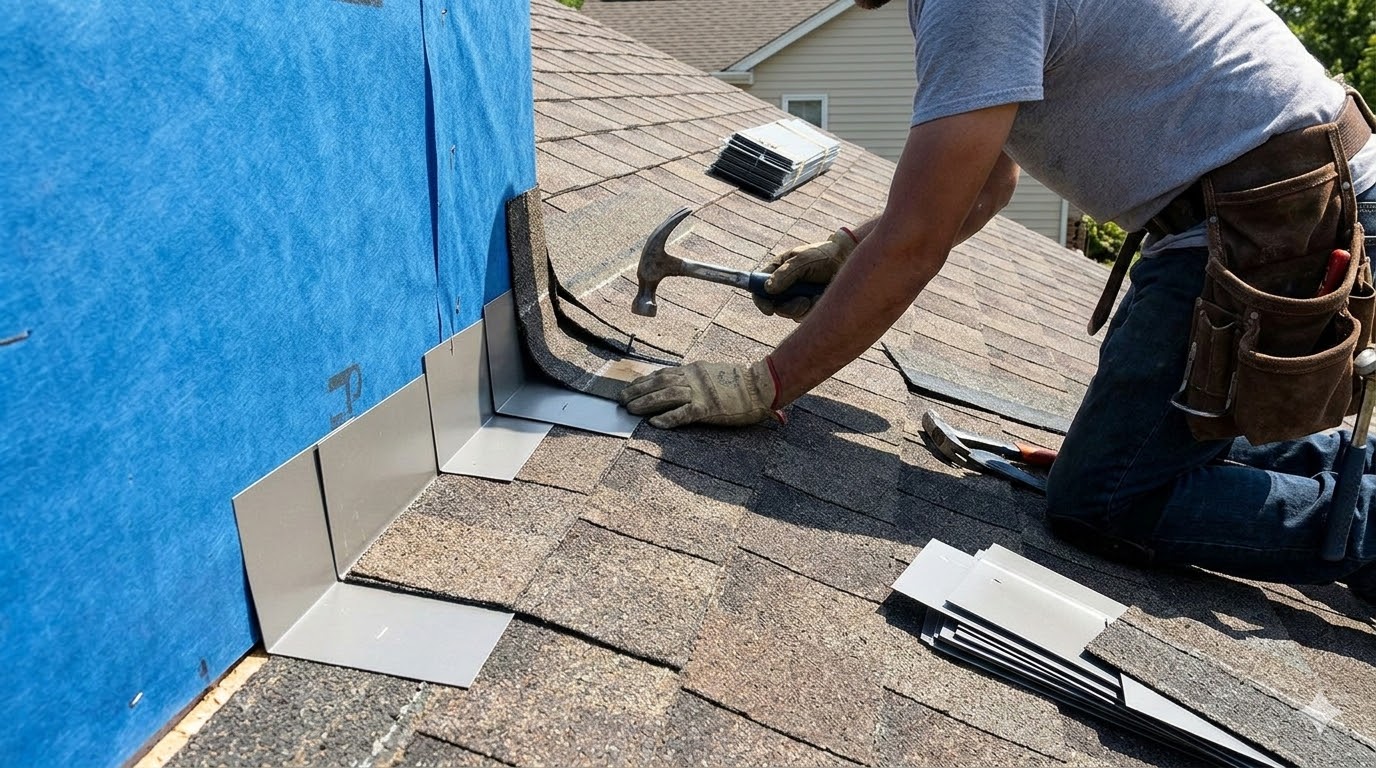
What it is: Individual L-shaped metal pieces woven into shingle courses where the roof meets a vertical wall, like dormers, chimneys, and sidewalls.
Why it's missed: Carriers argue step flashing can be reused if it's not visibly damaged.
Why that's wrong: Step flashing is nailed to the deck and woven between shingle courses. It cannot be practically reused once the surrounding shingles are torn off. Manufacturer guidelines call for replacement on re-roofs.
Typical value: $5-$8 per linear foot. A home with 40-80 feet of wall intersections means $200-$640 left on the table.
4. Ice and water shield
What it is: Self-adhering waterproof membrane installed along eaves, in valleys, and around penetrations.
Why it's missed: Adjusters often scope only standard felt underlayment, treating ice and water shield as optional.
Why that's wrong: Building code (IRC R905.1.2) requires ice barrier in eave areas extending at least 24 inches past the interior wall line in areas with a history of ice damming. This isn't a nice-to-have. It's a code requirement that's covered under Ordinance or Law provisions on most policies.
Typical value: $500-$2,000+ depending on eave length and valley count. This is one of the highest-value supplements.
5. Overhead and profit (O&P)
What it is: The standard 10% overhead + 10% profit added on top of direct job costs, reflecting what a general contractor charges to coordinate the work.
Why it's missed: This is the single most-disputed item in roofing insurance claims. Adjusters use the "three-trade rule," arguing O&P is only owed when three or more trades are involved. They'll claim a roof-only job is a single trade.
Why that's wrong: The three-trade rule has no binding legal authority in most states. Even a straightforward roof replacement typically involves multiple trades: roofers, dumpster haulers, gutter crews, and sometimes painters or siding contractors. Courts have increasingly sided with contractors on this issue.
Typical value: On a $12,000 roof job, O&P adds $2,400. This is often the single largest missed line item on any estimate.
6. Ridge cap and hip cap shingles
What it is: Specially shaped shingles installed along ridges and hips where two roof planes meet.
Why it's missed: Adjusters lump ridge cap into the waste allowance for field shingles, treating it as part of the overall shingle cost.
Why that's wrong: Ridge and hip cap are separate products with different material costs and labor rates. Enhanced high-profile ridge cap costs roughly $3 per linear foot more than standard cut 3-tab ridge. Estimating software has a dedicated line item for this.
Typical value: $150-$500 depending on total ridge and hip length.

7. Pipe boot flashings
What it is: Rubber or neoprene boots that seal around plumbing vent pipes penetrating the roof.
Why it's missed: Adjusters claim existing pipe boots can be reused, or they simply don't count all penetrations on the roof.
Why that's wrong: Pipe boots are sealed under and over shingles and are disturbed during tear-off. The rubber neoprene degrades over time and rarely survives removal. Standard practice is to replace all pipe boots during a full roof replacement.
Typical value: $63-$85 each at standard rates. A typical home has 3-6 penetrations, totaling $200-$500.
8. Steep and high roof charges
What it is: Additional labor charges for roofs with a pitch of 7/12 or steeper (steep charges) and for roofs two stories or higher (high/story charges).
Why it's missed: Adjusters sometimes apply the wrong steep category, undercount the affected area, or skip the charges entirely. Estimating software has three steep tiers that are frequently mis-applied.
Why that's wrong: Workers move slower, use more safety equipment, and are less productive on steep and high roofs. These charges exist in every major estimating platform for a reason.
Typical value: Steep charges can add $500-$2,000 on a full roof. High-roof charges typically add $200-$500 on top of that.
For the tier boundaries, the removal counterparts, and how the charges get allocated per square, see steep and high roof charges in Xactimate.
9. Debris hauling and dumpster fees
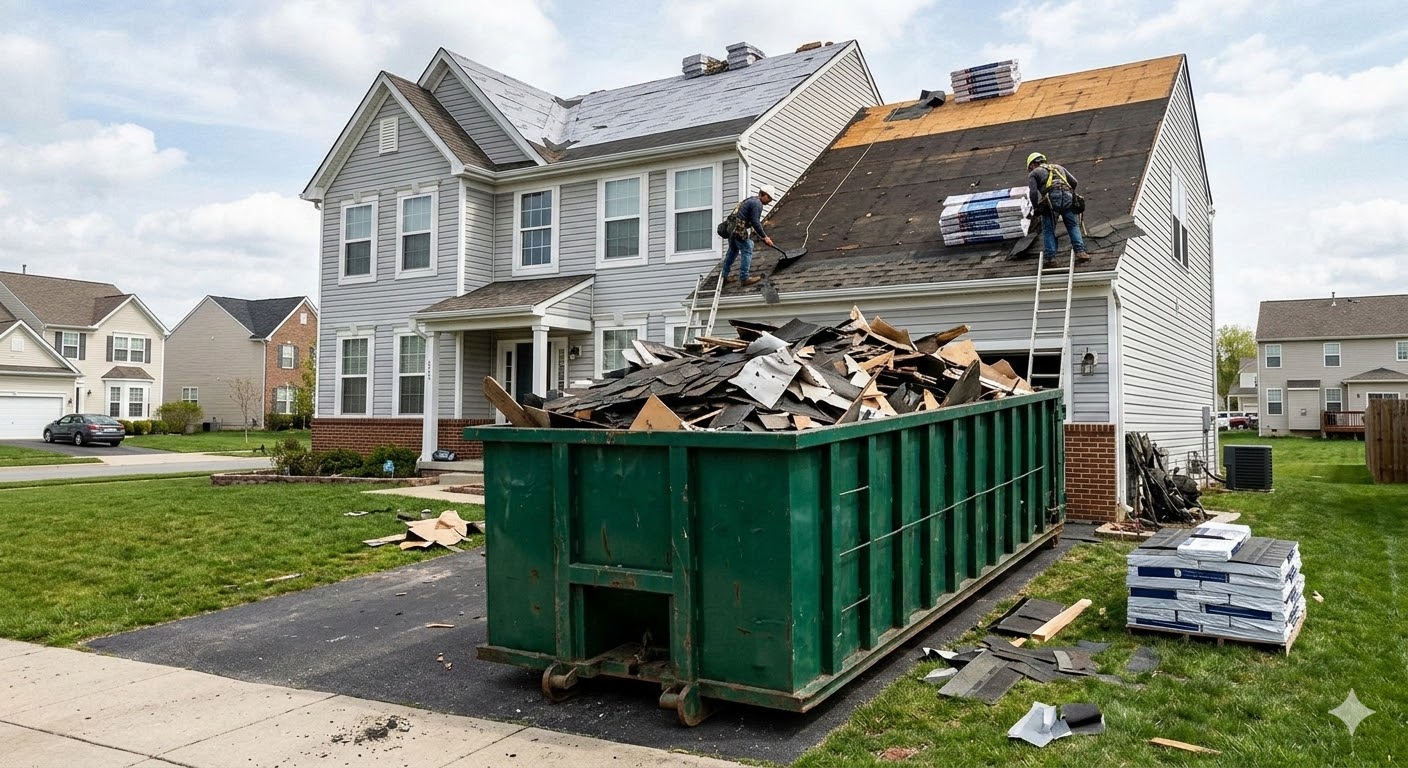
What it is: The cost of dumpster rental, haul-off labor, and dump fees for removed roofing materials.
Why it's missed: The standard shingle tear-off line item includes labor to remove shingles from the roof, but it does not include the cost of getting that debris off-site. Dumpster and haul-off must be added as separate line items.
Why that's wrong: Debris doesn't disappear. Somebody has to pay for the dumpster, the hauling, and the dump fee. This is a real job cost that estimating software intentionally separates from tear-off labor.
Typical value: $300-$800 per load. Second pulls for larger roofs or multi-layer tear-offs can double this. Total: $300-$1,600.
10. Building code upgrades
What it is: Any upgrade required to bring the roof up to current building code, including ventilation upgrades, additional ice barrier, and permit fees.
Why it's missed: Adjusters scope "like for like" replacements based on what was originally installed. They don't account for code changes that have occurred since the home was built.
Why that's wrong: When a roof is replaced, it must meet current building code, not the code that was in effect when the house was originally built. Ventilation requirements, ice barrier mandates, and fastener patterns have all changed. These upgrades are covered under the Ordinance or Law provision of most homeowner policies.
Typical value: Ventilation upgrades: $400-$1,500. Permit fees: $150-$500. Combined code upgrades can add $500-$2,000+ per job.
How much is this actually worth?
Add all of these up and it's easy to see why the average supplement recovers 20-30% more per claim. On a $12,000 roof job, that's $2,400 to $3,600 extra, and on some jobs significantly more.
The contractors who supplement consistently aren't doing anything aggressive. They're just making sure the insurance company pays for the full scope of work. The ones who don't supplement are leaving real money on the table, every single job.
The better fix is upstream: catch these in the original estimate instead of chasing them afterward. How a roofing insurance estimate is built walks through the whole structure, including where each of these items belongs.
Stop leaving money on the table
You don't need expensive estimating software or a supplement consultant taking 10-15% of every claim. ClaimSpark analyzes your claim documents, identifies missing line items like the ones above, and generates a professional supplement package in minutes, for a flat fee per supplement.
ClaimSpark helps roofing contractors generate professional estimates, build supplement packages, and maximize claim value. Try free — 1 estimate and 1 supplement included.