If you've been in roofing long enough, you've seen it: an insurance adjuster walks a property, writes up an estimate, and somehow misses half the job. The payout doesn't cover the actual cost of the work. The homeowner is frustrated. You're stuck deciding whether to eat the difference or walk away.
That's where a roofing supplement comes in.
What is a roofing supplement?
A roofing supplement is a formal request to an insurance company for additional funds beyond what was included in the original claim estimate. It's not a complaint or a dispute — it's a standard part of the insurance claims process that corrects for items the adjuster missed, underpriced, or left out entirely.
Supplementing is normal. Industry data shows that 78% of initial insurance estimates are missing line items that should have been included. The average insurance scope of loss is written for just 50–65% of what it should be, which means there's often 35–50% more money that the contractor is rightfully owed.
Why do initial estimates come up short?
Insurance adjusters aren't roofers. They use estimating software to generate pricing based on general data, but they frequently miss things that a contractor on the roof would catch immediately.
What Adjusters Miss
78% of initial estimates are missing line items
Material Components
- –Step flashing
- –Starter course
- –Drip edge
- –Valley lining
- –Ridge/hip caps
Code Upgrades
- –Ice & water shield
- –Ventilation requirements
- –Permit fees
Labor & Fees
- –Overhead & profit (O&P)
- –Steep slope charges
- –High roof charges
- –Debris removal
Accessories
- –Pipe boots
- –Ridge vent
- –Gable cornice strips
None of this is necessarily malicious. Adjusters handle dozens of claims and often inspect from the ground or from photos. They simply don't have the same perspective as the contractor who's actually on the roof.
How the supplement process works
The Supplement Process
Review Estimate
Compare adjuster's scope against actual roof conditions
Document Everything
Photos, measurements, and local code requirements
Build Supplement
Create revised estimate with correct line items and evidence
Submit to Carrier
Send package through insurer's preferred channel
Follow Up
Negotiate, clarify, and document until approved
1. Review the initial estimate line by line
Go through the adjuster's estimate and compare it against what you see on the roof. Look for missing items, incorrect quantities, and outdated pricing. This is where most of the money is hiding.
2. Document everything
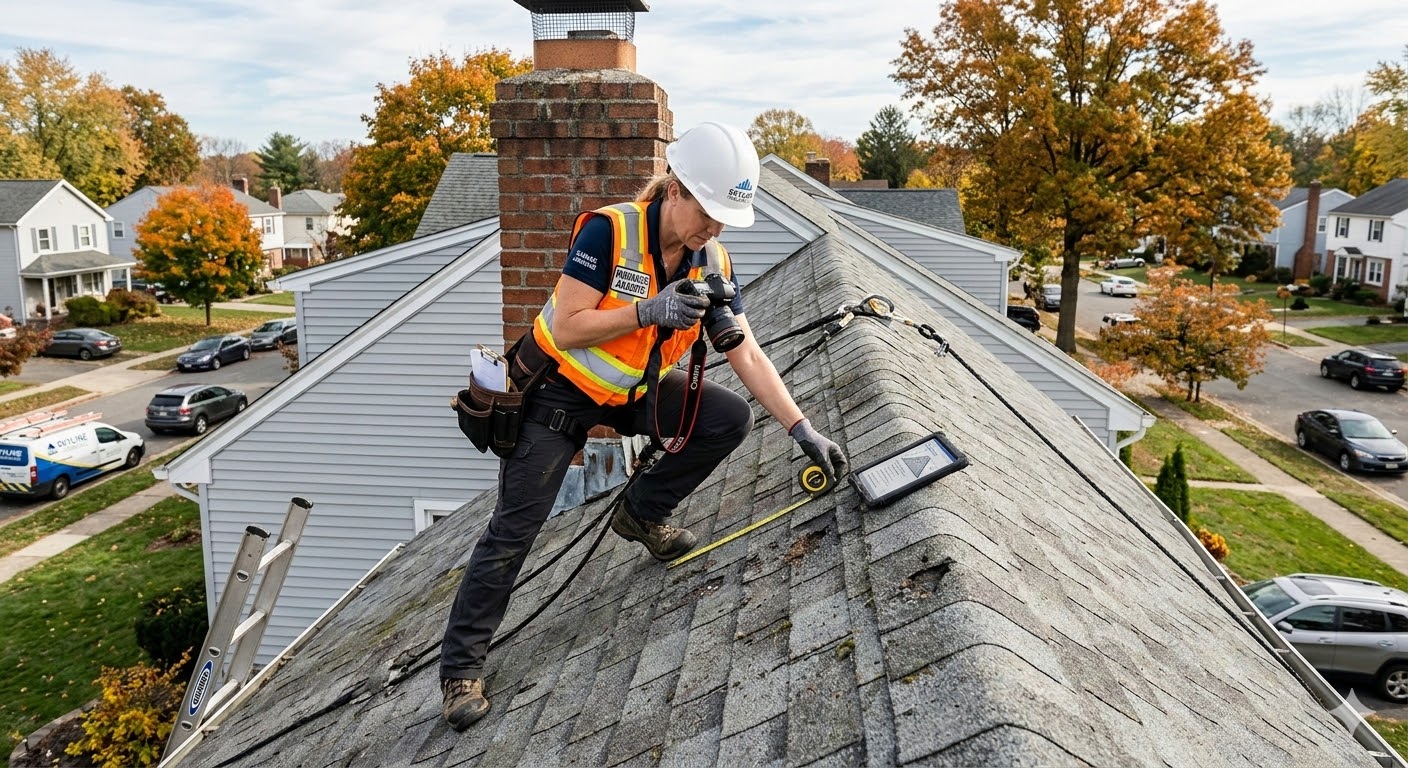
Take detailed photos of every area of damage and every item you plan to supplement. Include wide shots for context, mid-range shots to show the specific area, and close-ups that clearly show damage signatures. Date-stamped photos are ideal.
For code upgrades, pull the specific local building code requirements and include them as supporting documentation.

3. Build your supplement package
Create a revised estimate that includes every missing or underbilled line item, with the correct pricing codes and quantities. Each line item should be tied to photographic evidence or code documentation.
This is the part that historically required expensive estimating software or a paid consultant. Tools like ClaimSpark now let contractors build professional, insurance-ready supplement packages without either.
4. Submit to the insurance company
Send your supplement package through the carrier's preferred channel — email, adjuster portal, or third-party platform. Include a cover letter summarizing what was missed, your revised estimate, all supporting photos, and any code documentation.
5. Follow up and negotiate
Once submitted, the adjuster typically responds within 5–14 days. Be prepared to answer questions, provide clarifications, or negotiate on specific line items. Document every exchange. Stay professional and stick to the data.
How much more money can a supplement recover?
The numbers vary by job, but industry benchmarks are consistent:
Industry Benchmarks
20–30%
Average claim value increase from supplements
90%+
Approval rate for well-documented supplements
$1,000+
Typical additional recovery per claim
On a $15,000 roof job, a 25% supplement means an extra $3,750 that you were owed but wouldn't have received without filing.
When should you file a supplement?
Every time the estimate doesn't match reality. If you've reviewed the adjuster's estimate and identified items that are missing, underpriced, or not up to code — that's a supplement.
Common triggers include:
- Missing line items for materials or labor that are clearly needed
- No overhead and profit on a job involving multiple trades
- Code upgrade requirements not accounted for in the original estimate
- Damage discovered during tear-off that wasn't visible during the initial inspection
- Measurement discrepancies between the adjuster's scope and actual roof dimensions

What about pre-supplements?
A pre-supplement (sometimes called a "pre-sup") is when you build your own complete estimate before the adjuster even visits. You upload your roof report and photos, generate a full line-item estimate, and have it ready to present alongside — or instead of — the adjuster's scope.
Pre-supplements put you in a stronger negotiating position because you're leading with your own documentation rather than reacting to theirs.
The old way vs. the new way
Traditionally, contractors had two options for supplements:
- Do it yourself — which required expensive estimating software, knowledge of pricing codes, and hours of formatting time per claim
- Hire a supplement consultant — who charges 10–15% of every claim, eating directly into your margin
Neither option is great. The first costs time you don't have. The second costs money you shouldn't have to give up.
That's why we built ClaimSpark. Upload your documents, and ClaimSpark identifies missing line items, flags underbilled codes, and generates a professional supplement package in minutes — for a flat fee per supplement. No percentage cuts, no expensive software subscriptions.
One compliance note before you supplement
Submitting a scope, estimate, or supplement for your own work is your business, and it's lawful everywhere. Negotiating the settlement on the homeowner's behalf is a different act — most states require a public adjuster license for that, and a number of them bar roofing contractors from it outright. The line is worth knowing before you tell a homeowner you'll "handle the claim." Our state-by-state reference shows where your state draws it, alongside the rules on labor depreciation, matching, and deductibles.
Key takeaways
- A roofing supplement is a standard, legitimate request for additional insurance funds
- 78% of initial estimates have missing line items — supplements correct this
- The average supplement recovers 20–30% more per claim
- Documentation is everything: photos, measurements, and code references win approvals
- You don't need expensive software or a consultant to supplement effectively anymore
ClaimSpark helps roofing contractors generate professional estimates, build supplement packages, and maximize claim value. Try free — 1 estimate and 1 supplement included.