Two of the most commonly missing line items on a roof estimate are also two of the easiest to prove: the steep charge and the high charge. They exist because a 10/12 roof two stories up takes longer and costs more to work than a walkable ranch, and Xactimate prices that difference explicitly.
The short version: steep-slope surcharges begin at a 7/12 pitch and run in three tiers, and height is handled by a single separate item at two stories or greater. Both are priced by the square, and both are discrete line items — they only appear if someone entered the pitch and the story count correctly when the roof was scoped.
That last part is why they go missing.
First, the 4/12 problem
Search this topic and you'll be told the steep threshold is 4/12. It isn't, and it's worth understanding why that claim is everywhere, because the confusion is legitimate.
"Steep slope" means two different things in roofing. The industry's low-slope/steep-slope classification sits down around 3:12 to 4:12, and it governs real requirements — underlayment specification, for instance, where compliance language commonly reads "roof slopes 4:12 and greater." That's a materials-and-code classification, and 4:12 is a genuine threshold within it.
Xactimate's steep-slope surcharge ladder is a separate thing entirely, and it starts at 7/12. A 5/12 roof is "steep slope" in the industry sense and carries no steep charge in Xactimate. Conflating those two ideas is almost certainly how the 4/12 claim entered circulation, and it now gets repeated by content that has never opened a price list.
One tell worth knowing: some of the pages making the 4/12 claim cite "ASTM D3621" as authority for it. ASTM D3621 is a withdrawn standard about determining water content in acetate esters. It has nothing to do with roofs. If a source cites it, that source is machine-generated and you should not trust anything else on the page either.
The three steep tiers
Where the Charges Kick In
Walkable. The industry calls 4/12+ “steep slope,” but Xactimate’s surcharge doesn’t start here.
Additional charge for steep roof - 7/12 to 9/12 slope
Additional charge for steep roof - 10/12 - 12/12 slope
Additional charge for steep roof greater than 12/12 slope
Additional charge for high roof (2 stories or greater). One threshold only, independent of pitch.
Each item has a matching Remove counterpart for tear-off, and all are priced by the square against the portion of roof in that band. Wording and rates vary by Xactimate version and by the monthly, market-specific price list.
The line items are worded in the software almost exactly as you'd expect, and there are three of them:
- Additional charge for steep roof - 7/12 to 9/12 slope
- Additional charge for steep roof - 10/12 - 12/12 slope
- Additional charge for steep roof greater than 12/12 slope
Each one carries a matching Remove counterpart for the tear-off side of the job — so on a steep roof you should be seeing the charge twice, once against removal and once against installation. Missing the removal half is a quiet and common shortfall.
The high charge is separate, and there's only one
Height is its own item: Additional charge for high roof (2 stories or greater). It also has a Remove counterpart.
Two things about it. First, there is exactly one height threshold. You'll see claims about a separate three-story or multi-story access item — a full roofing price list carries one height item, not a tiered ladder like the steep charges. Don't build a supplement around a three-story line item.
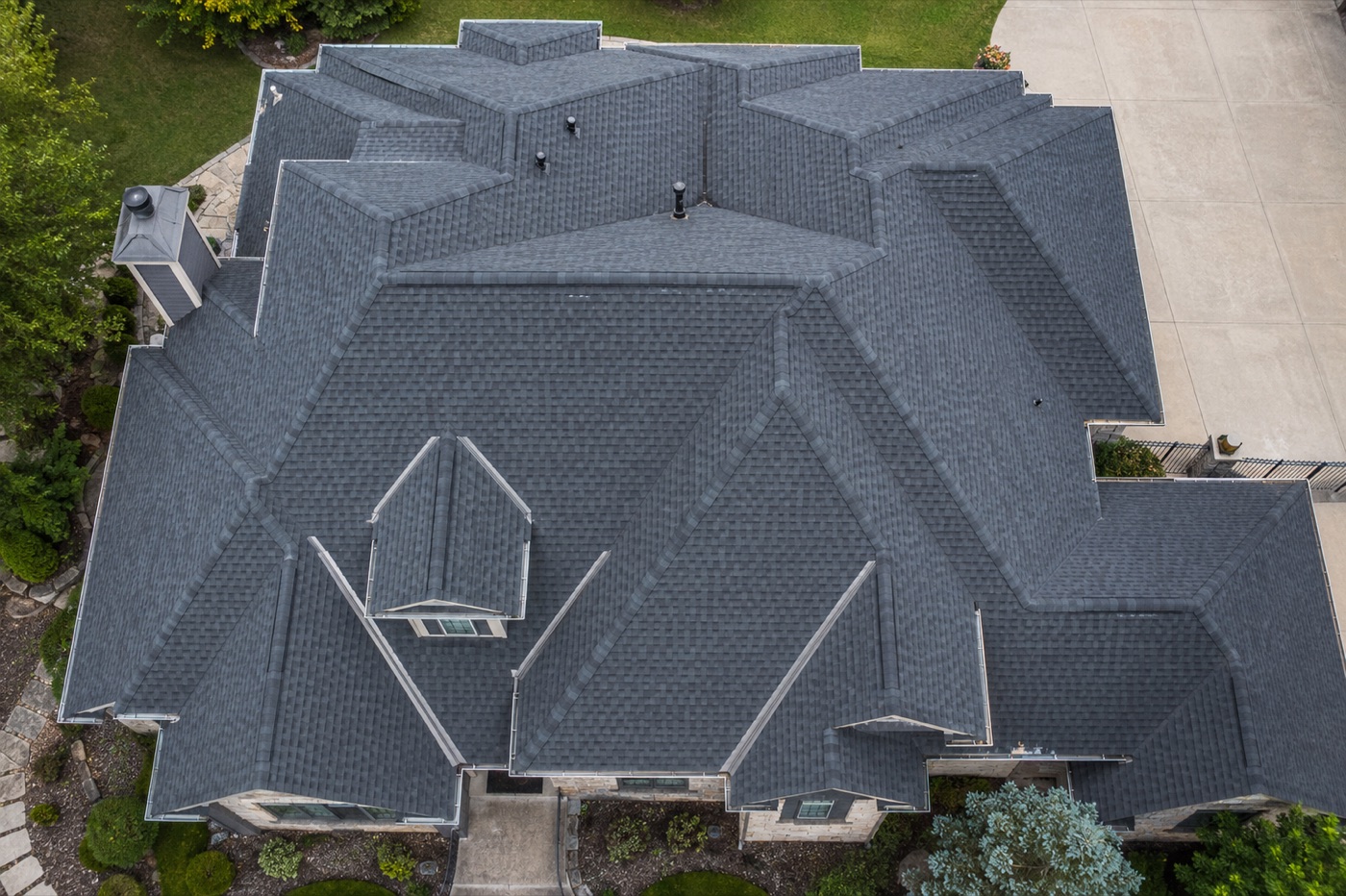
Second, the high charge is independent of pitch, which means the steep and high quantities on the same estimate are frequently different numbers. A two-story house with a walkable garage roof and a steep main roof will carry one square count for height and a different one for pitch. Seeing them differ isn't an error.
How stories get counted — whether a walk-out basement counts — isn't something Verisk documents publicly. Estimating consultants generally describe it as floors at and above grade with a basement excluded unless it's a walk-out. Treat that as a rule of thumb, not authority, and photograph the elevation when it's genuinely borderline.
How they're applied: per square, per band
This is the part that changes how you read an estimate.
These aren't whole-roof multipliers. They're priced by the square and applied only to the portion of the roof that falls in each band. A roof with two different pitches gets split across two tiers.
Here's a real example from a published Xactimate estimate: a 51.93-square roof carried 46.25 squares at the 7/12–9/12 rate plus 5.68 squares at the 10/12–12/12 rate. The two add back to the total. The estimator didn't pick a tier for the roof — the software allocated each facet to its own band.
So when you're checking an estimate, don't just ask whether a steep charge is present. Ask whether the quantity matches the geometry: does the square count in each tier reflect the facets that are actually at that pitch? A roof scoped entirely at its lowest pitch will show a steep charge that looks correct and is quietly short by several squares.
Why they go missing
Steep and high charges are absent from estimates for boring reasons, not adversarial ones:
- The pitch was never entered. If the roof was sketched at a default pitch, no steep charge generates. The estimate looks complete and internally consistent — it's just describing a different roof.
- The pitch was entered for one facet. Multi-pitch roofs get flattened to a single value, which collapses the tier split described above.
- Only the install side was charged. The Remove counterpart is left off.
- The story count is wrong, often on a split-level or a home that's two stories at the back and one at the front.
- Nobody documented it, so there's nothing to point at when it's questioned.
None of these require anyone to act in bad faith. They're data-entry outcomes, which is exactly why they're winnable.
How to document and supplement them
Because these charges are conditions of the roof rather than judgment calls, they're among the more straightforward supplements to support:
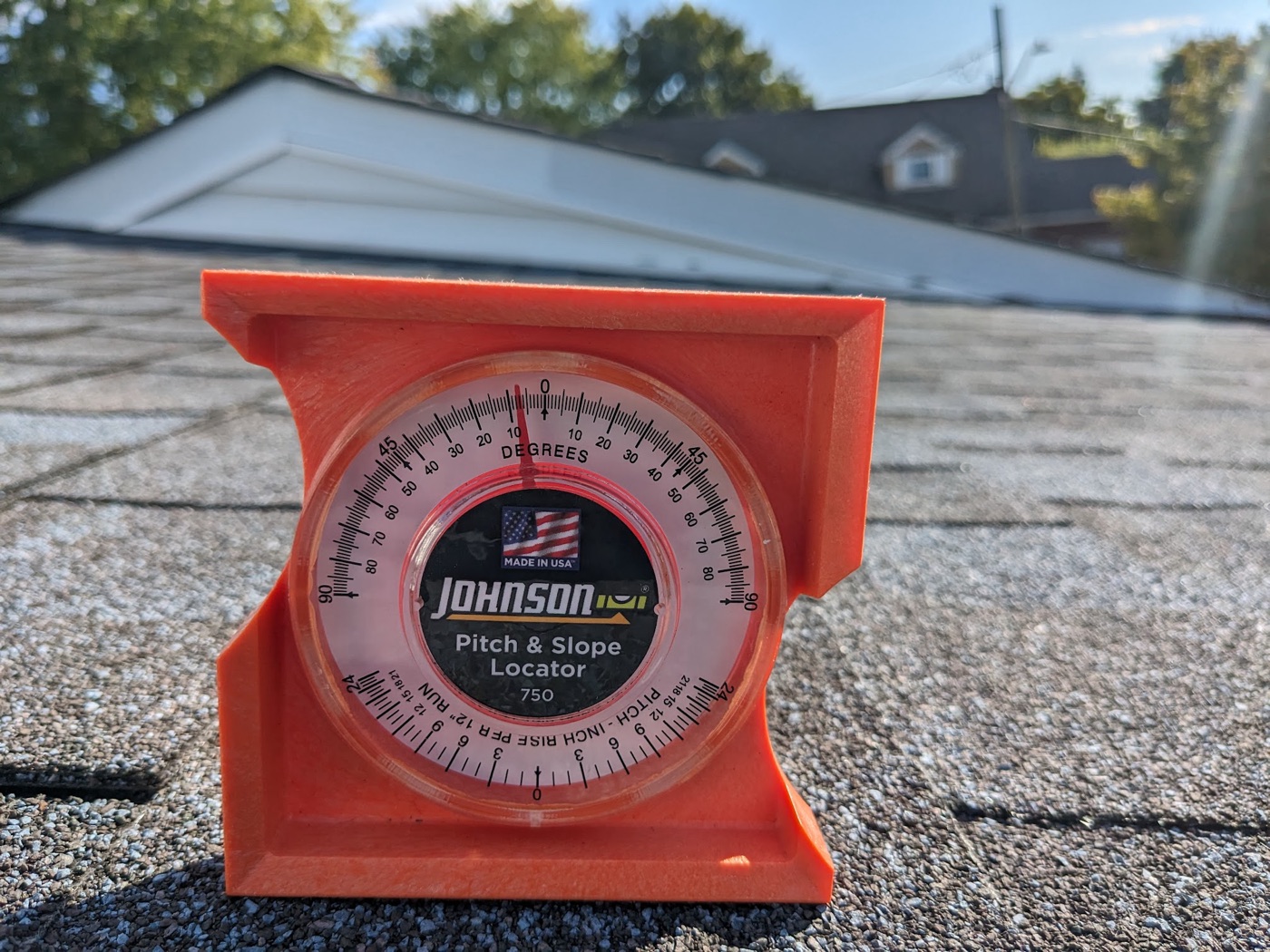
- Photograph the pitch. A pitch gauge or level against the slope, in frame, on the facet in question. Do this for each distinct pitch on the roof.
- Photograph the elevation from the ground so the story count is unambiguous.
- Attach the measurement report. A facet diagram with per-facet pitch is the single strongest document here, because it establishes the square count in each tier without argument.
- Ask for the specific tier, by its wording. Request the charge by the line-item description and the square count you're claiming, not just "add steep charges."
- Check both halves. Removal and installation.
This is the same evidence-first pattern that wins the line items adjusters miss and that underpins a properly built estimate — document the condition, cite the item, ask for the specific quantity.
What not to repeat
A few things circulate confidently and shouldn't be relied on:
- The shorthand codes. You'll see "RFG STEEP," "RFG STEEP>," and "RFG STEEP>>" presented as selectors. Those don't appear in Verisk material or in actual Xactimate output we could examine — the tiered variants trace only to blogs copying each other. Treat them as field shorthand and look the items up by description in your own price list.
- A three-story line item. One height threshold exists: two stories or greater.
- Specific dollar amounts. Rates are market-specific and republished monthly, so any figure you read in an article is one market in one month, and probably years stale. Check your own list.
Key takeaways
- Xactimate's steep surcharges start at 7/12, not 4/12 — the 4/12 figure comes from the separate low-slope/steep-slope materials classification.
- Three tiers: 7/12–9/12, 10/12–12/12, and greater than 12/12. Height is one item at two stories or greater.
- Every one of them has a Remove counterpart — check both halves of the job.
- They're priced by the square and allocated per band, so a multi-pitch roof splits across tiers and the quantities must match the geometry.
- They generate only from entered pitch and story count, which is why a pitch gauge photo and a facet diagram do most of the work.
- Wording and rates vary by Xactimate version and by the monthly, market-specific price list — confirm against your own before leaning on it.
Stop finding these after the fact
Steep and high charges are worth real money on exactly the roofs that are hardest to work, and they're missed for clerical reasons rather than contested ones. ClaimSpark reviews your claim documents and flags the pitch and height charges the scope should carry — including the removal halves — and builds the supplement around the documentation that supports them, for a flat fee per supplement rather than a percentage of your claim.
ClaimSpark helps roofing contractors generate professional estimates, build supplement packages, and maximize claim value. Try free — 1 estimate and 1 supplement included.