One of the quietest ways money leaks out of a roof estimate isn't a missing line item — it's a line item priced under the wrong labor trade. When Xactimate prices your tear-off using demolition (DMO) labor instead of roofing (RFG) labor, the removal comes in at roughly half of what skilled, insured roofing labor actually costs. It's easy to miss, it shows up on most estimates, and it's fixable with a supplement.
Here's what the two codes mean, why the gap exists, and how to correct it.
What RFG and DMO mean in Xactimate
Xactimate organizes every line item by trade category, and the two-letter prefix tells you which trade's pricing the item uses. Two matter here:
- RFG — Roofing. Skilled, insured roofing labor: the crew that tears off and installs the roof.
- DMO — Demolition. Non-specialized removal labor — the category Xactimate uses by default for tearing out and hauling off materials across trades.
The reason the prefix matters is that each trade carries its own fully-burdened labor rate. Per Verisk's own pricing methodology, a retail labor rate is built from three parts: the worker's wage, the labor burden (workers' comp, liability, unemployment, FICA), and labor overhead. A skilled roofing laborer working two stories up on a steep pitch carries far more burden — especially liability and comp — than a ground-level demolition laborer. So RFG and DMO aren't interchangeable; they're priced differently on purpose.
The default that quietly undervalues tear-off
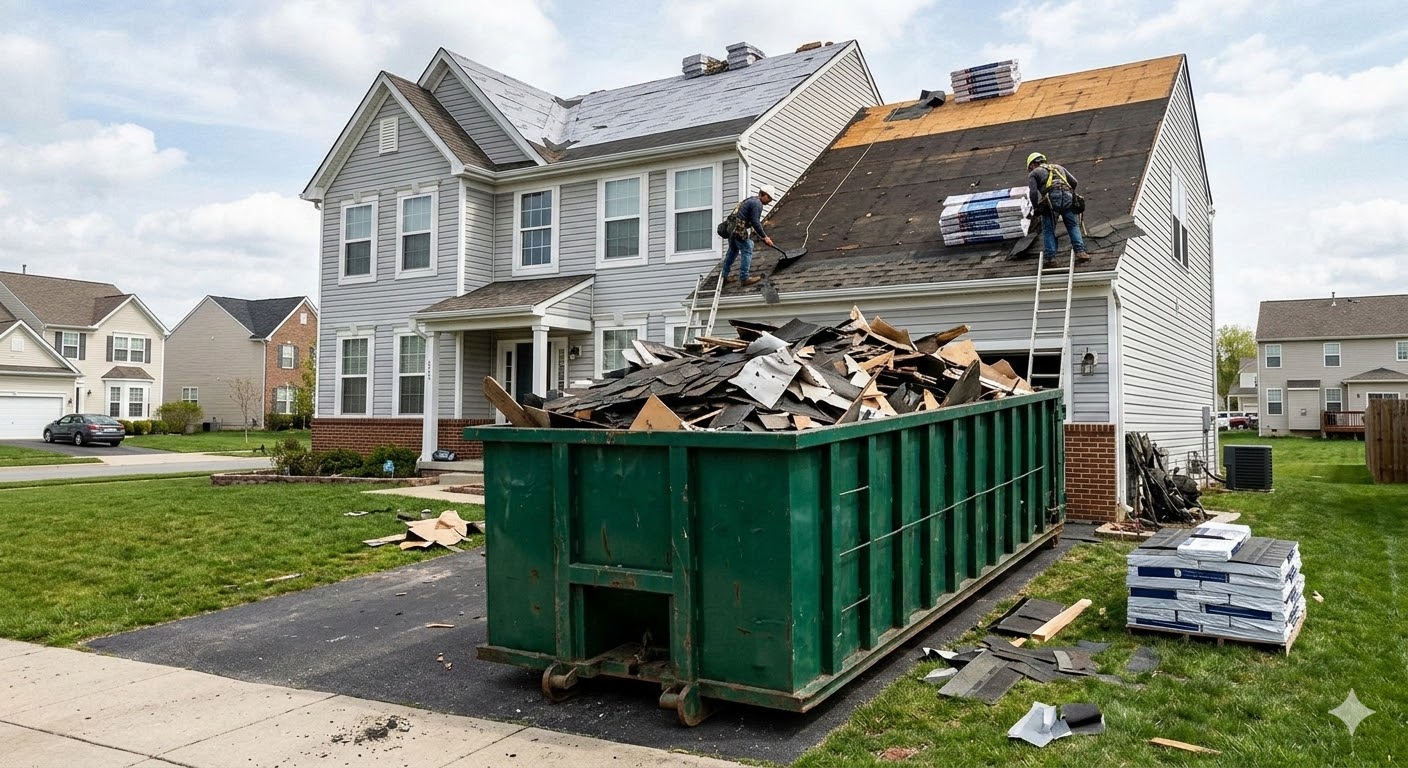
Here's the catch. Xactimate has historically defaulted the removal of roofing materials to the DMO trade — as if a separate crew of non-specialized day laborers shows up, strips the old roof, and leaves before the skilled crew arrives to install the new one.
That's not how roofing works. One insured, skilled crew does both the tear-off and the installation — there is no separate day-labor demolition crew, and no roofer is sending uninsured labor onto a roof. But because the removal line items default to demolition labor, they get priced as if that's exactly what happened.
The result: your tear-off, your ridge and hip removal, your flashing removal — the labor to strip all of it — gets valued at demolition rates instead of roofing rates. (Defaults and rates shift by Xactimate version and region, so confirm against the current price list — but the DMO-default pattern on removal items is long-standing.)
What the gap actually costs
The rate difference is not small. In a representative price list, roofing removal labor priced under DMO runs around $45 per square, versus roughly $108 per square under RFG — a bit less than half. (Exact figures vary by region and price-list update; treat these as illustrative, not universal.)
Removal Labor: DMO vs. RFG (per square, illustrative)
Pricing roofing removal at demolition labor values it at roughly half the roofing rate. Exact figures vary by region and price-list update.
Now scale it. On a 40-square roof, that single removal line item priced at DMO instead of RFG can leave $2,000+ on the table — and removal typically isn't the only item that defaults to demolition labor. Across the five or six line items on a full replacement that lean on DMO, the miscategorization quietly adds up to real money on every job.
Why RFG is the correct rate
This isn't padding the estimate. It's pricing the labor that actually does the work.
The argument is straightforward and it's grounded in Xactimate's own logic: the labor removing your roof is the same skilled, insured crew that installs it, so it should be priced at the roofing trade's rate, not a demolition day-laborer's. Verisk builds trade-specific, fully-burdened labor rates precisely because a roofing laborer's real cost — wage plus comp plus liability plus overhead — is higher than a demolition laborer's. Pricing roofing work at demolition rates ignores the burden a roofing contractor actually carries.
How to fix it: supplement the labor trade
Correcting it is a clean, well-supported supplement:
- Find the DMO line items. Go through the estimate and flag every removal/tear-off item priced under demolition labor.
- Request the change to RFG. Ask the carrier to reprice those removal items using the roofing (RFG) labor trade rather than demolition.
- Support it with the facts. Document that a single insured, skilled roofing crew performs both the tear-off and the installation, and point to the trade-specific, fully-burdened labor rates in Xactimate's own methodology. Your certificate of insurance showing you carry comp and liability on that crew reinforces it.
- Tie it to the standard, not a preference. You're not asking for a higher rate as a favor — you're asking the estimate to reflect the trade that actually did the work.
This is the same line-by-line discipline that recovers the line items adjusters miss and that wins when you fight a lowball estimate: compare the estimate against reality, and correct it with documentation. It's also one piece of a larger habit — see how a roofing insurance estimate is built end to end.
Key takeaways
- In Xactimate, RFG is skilled roofing labor and DMO is non-specialized demolition labor — priced differently on purpose, because each trade carries its own fully-burdened rate.
- Removal/tear-off items commonly default to DMO, valuing them at roughly half the roofing rate.
- One insured, skilled crew does both tear-off and install — so removal labor should be priced at RFG, not demolition.
- The gap can be $2,000+ on a single line item on a larger roof, across several items per job.
- It's a clean supplement: reprice the DMO removal items to RFG and support it with your insured-crew documentation.
Catch it before you submit
Spotting a mispriced labor trade means reading every line against what the job actually requires — exactly what ClaimSpark is built to do. It reviews your estimate, flags removal items defaulted to demolition labor and other underpriced codes, and builds an insurance-ready supplement package to correct them — for a flat fee per supplement, not a cut of your claim.
ClaimSpark helps roofing contractors generate professional estimates, build supplement packages, and maximize claim value. Try free — 1 estimate and 1 supplement included.